
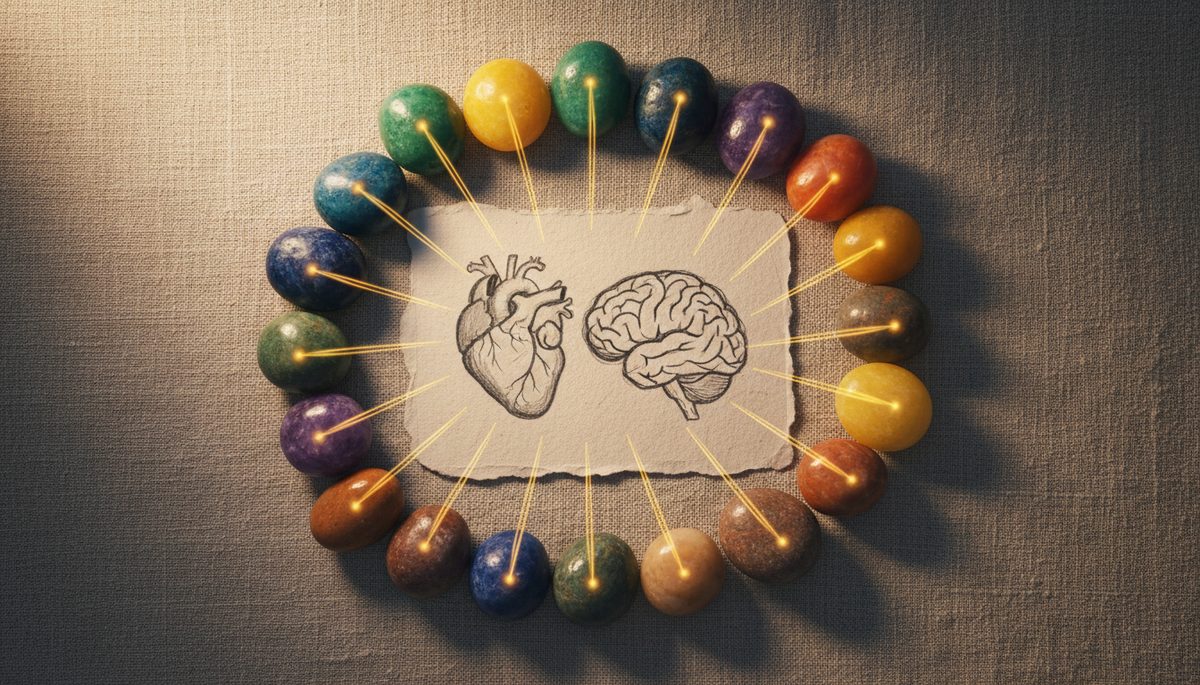
Manifestation can sound mystical until you look at what happens inside the body. A clear intention changes what the brain pays attention to. A strong emotion changes what the body prepares to do. Together, the heart and brain shape perception, choices, behavior, and the energy behind action.
That does not mean thoughts alone bend reality on command. Life includes other people, timing, resources, and uncertainty. Yet the inner state matters. The brain helps aim attention. The heart, through emotion and body signals, gives that aim meaning and force. When they work together, goals feel less abstract. They become easier to notice, choose, practice, and pursue.
This is where manifestation becomes practical. It is the art of aligning focus, feeling, belief, and action so desired outcomes have a better chance of becoming real.

The heart and brain are in constant conversation
The brain is often treated as the command center of manifestation because it handles imagination, attention, planning, memory, and decision-making. It can picture a future outcome, compare options, and keep a goal active over time.
The heart is often treated as symbolic, but it also plays a real role in how experience feels. The heart responds to emotional states through changes in rhythm, pace, and physical sensation. Anyone who has felt their heart race before a big decision, soften during gratitude, or tighten during fear knows this directly.
The heart and brain communicate through the nervous system, hormones, and body feedback. The vagus nerve, for example, helps carry signals between the body and brain. Emotional states can affect breathing, posture, muscle tension, digestion, and alertness. The brain reads those signals and uses them as part of its sense of what is safe, possible, urgent, or meaningful.
In manifestation, this matters because the brain does not focus in a vacuum. It focuses from a state.
A person with the same goal can experience two very different inner climates:
Scattered focus
The brain jumps between doubts, distractions, and old stories.
Fear-heavy emotion
The body prepares for threat, avoidance, or shutdown.
Mixed behavior
Actions are inconsistent or reactive.
Steady focus
The brain has a clear target and returns to it often.
Heart-led emotion
The body feels connected, open, and ready to act.
Aligned behavior
Actions match the desired outcome more often.
The goal may be the same, but the internal signal is different. That signal shapes what the person notices, how they interpret events, and what they do next.
A useful way to think about manifestation is this: the brain chooses the direction, and the heart supplies the emotional charge that keeps the direction alive.
Focus tells the brain what to look for
The brain filters a huge amount of information every day. It cannot give equal attention to every sound, image, memory, and possibility. Focus helps decide what gets through.
When you hold a goal clearly, the brain starts to notice related cues. If someone decides to become healthier, they may suddenly notice walking paths, meal ideas, fitness conversations, or the feeling of energy after sleep. Those things may have been there before, but the mind did not tag them as relevant.
That is one practical reason focus matters in manifestation. It trains attention.
Focus also improves decision-making. A vague wish creates vague behavior. A clear intention makes it easier to ask, “Does this choice support the outcome I want?”
For example, compare these intentions:
- “I want a better life.”
- “I want to build a calm, healthy morning routine that supports my energy.”
- “I want to earn a certification in the next six months and practice three evenings a week.”
- “I want to speak to myself with more patience during stressful moments.”
The clearer the focus, the easier the brain can organize around it.
This is where Heart and Brain in Manifestation Harnessing Focus Emotions and Energy for Desired Outcomes becomes more than a phrase. It describes a pattern. Focus gives the mind a map. Emotion gives the map urgency, value, and staying power.
Visual idea for reader engagement
A dynamic graphic can make this concept easier to grasp. Picture an animated “attention filter” where hundreds of dim dots float across the screen. When a clear intention appears, related dots brighten and move toward the center.
This kind of visual shows how focus does not create every opportunity from nothing. It helps the brain recognize the opportunities that match the chosen path.

Emotions give manifestation its momentum
A goal without emotion often fades. It may sound good, but it does not move the body. Emotion turns an idea into something felt.
Emotion affects manifestation in several ways:
- It changes energy levels.
- It influences risk tolerance.
- It shapes memory and motivation.
- It affects whether action feels inviting or threatening.
- It gives meaning to the goal.
Fear, shame, and pressure can create movement for a while, but they often drain energy. Gratitude, love, curiosity, devotion, and calm confidence tend to create a steadier form of motivation. They make the desired outcome feel safe enough to approach.
This does not mean every manifestation practice needs to feel joyful. Real desire can bring grief, frustration, doubt, or impatience to the surface. Those emotions are not failures. They are information. The key is to notice them without letting them become the whole instruction.
For example, a person manifesting a new creative path may feel excitement and fear at the same time. The fear may say, “Stay hidden.” The heart’s deeper desire may say, “Share what you are here to make.” Manifestation becomes the practice of listening long enough to choose the emotional signal that supports growth.
Gratitude changes the inner starting point
Gratitude is often used in manifestation because it shifts attention from lack toward connection. It does not deny what is missing. It helps the body feel resourced enough to move.
A simple gratitude practice can sound like this:
“I am grateful for the skills I already have. I am grateful for the chance to learn. I am grateful for one next step I can take today.”
This kind of practice helps link the brain’s focus with the heart’s felt sense of safety and trust.
The heart gives direction through values
The brain can chase almost anything. Status, approval, money, beauty, achievement, comfort, escape, attention. The heart helps ask a deeper question: “Why does this matter?”
That question protects manifestation from becoming a list of borrowed desires. A goal may look impressive from the outside but feel empty inside. Another goal may look ordinary but feel deeply aligned.
The heart often speaks through values. These may include freedom, service, family, creativity, peace, health, truth, adventure, or belonging. When a desired outcome connects to a value, the brain has a stronger reason to stay focused.
Try this reflection:
- Name the outcome you want.
- Ask why you want it.
- Ask what feeling or value sits underneath it.
- Notice whether the outcome still feels true.
- Adjust the goal so it matches the deeper value.
For example, “I want more money” may become “I want financial stability so I can feel safe, generous, and present with my family.” That refined intention carries more emotional truth. It gives the brain a clearer target and the heart a reason to stay engaged.
Visual idea for reader engagement
A second dynamic graphic could show a heart at the center with values orbiting around it. When a goal aligns with a value, the line between the heart and brain glows brighter. When a goal is based only on comparison, the line becomes faint.
This helps readers see that alignment is not a mood. It is a relationship between desire, meaning, and action.

How brain energy and heart energy shape reality
Reality is shaped at several levels. Some are external, such as resources, events, and other people’s choices. Some are internal, such as perception, meaning, expectation, and behavior. Manifestation works most reliably when it respects both.
The brain shapes reality by:
- Selecting what to notice
- Creating mental images of the future
- Planning next steps
- Rehearsing habits
- Interpreting setbacks
- Choosing where attention returns
The heart shapes reality by:
- Giving emotional meaning to desire
- Signaling safety, fear, expansion, or contraction
- Helping connect goals to values
- Influencing presence and connection
- Sustaining motivation through feeling
When these two systems conflict, manifestation feels uneven. The mind may repeat affirmations, while the body feels unsafe. The heart may long for change, while the brain keeps rehearsing old limits. This creates mixed action.
When they align, the inner message becomes simpler: “This matters, and I am willing to move toward it.”
That alignment can change behavior in quiet but powerful ways. A person may speak up sooner, prepare more consistently, notice helpful people, recover faster from setbacks, or stop choosing situations that contradict the desired future.
These shifts may look small from the outside. Over time, they alter the path.
Practical tips for harnessing heart and brain energy
Manifestation becomes stronger when it moves from idea into practice. The following tools help combine mental focus with emotional alignment.
Write one clear intention each morning
Choose one intention that points your attention for the day. Keep it specific.
Examples:
- “Today, I choose calm, direct communication.”
- “Today, I take one step toward my training plan.”
- “Today, I notice evidence that support is available.”
- “Today, I protect my energy by honoring one boundary.”
Writing the intention helps the brain encode it. Reading it slowly helps the body receive it.
Pair visualization with emotion
Many people visualize outcomes as if watching a movie. To include the heart, add feeling.
Close your eyes and picture the desired outcome. Then ask:
- What does my body feel when this is possible?
- How does my breathing change?
- What emotion do I want to practice now?
- What small action would match that state today?
Stay with the feeling for a minute or two. Let the body rehearse the state, not just the image.
Use breath to bring the heart and brain into rhythm
Slow breathing can help calm the body and steady attention. Try this simple practice:
- Sit comfortably.
- Place one hand over the center of the chest.
- Inhale for a slow count of four.
- Exhale for a slow count of six.
- Think of one person, place, or memory that brings warmth.
- Hold your intention in mind for a few breaths.
This practice can help shift from mental noise into steadier focus. It is not a cure for anxiety or a replacement for mental health care. It is a simple self-regulation tool for everyday use.
Turn your desire into one embodied action
The brain likes evidence. The heart likes sincerity. Give both a real-world signal.
Ask, “What is one action that proves I am moving toward this?”
If the desire is health, drink water and take a walk. If the desire is love, send an honest message or practice kinder self-talk. If the desire is creative expression, open the file, tune the instrument, or sketch for 10 minutes.
Small actions teach the brain that the goal is active. They teach the heart that the desire is being honored.
Track emotional evidence, not just results
Results can take time. Emotional evidence can appear sooner.
At the end of the day, write down:
- One moment when you returned to your intention
- One choice that matched your desired identity
- One feeling you practiced on purpose
- One sign of progress, even if small
This keeps motivation alive without forcing constant external proof.
Dynamic graphics can make these ideas more memorable
Concepts like focus, emotion, and inner alignment can feel invisible. Dynamic graphics help make them concrete. They can also keep readers engaged because they show movement, connection, and cause-and-effect patterns.
Strong visual ideas include:
- An animated heart-brain loop with light moving both ways
- A focus filter showing attention narrowing toward a goal
- A body map showing how emotions appear as physical sensations
- A values compass guiding a person along a path
- A split-screen showing scattered energy becoming coherent
- A daily practice wheel with intention, breath, visualization, action, and reflection
The best graphics should feel human, not clinical. Soft motion, warm colors, clear labels, and simple symbols can make the content easier to remember. The goal is not decoration. The goal is to help the reader see how inner experience becomes outer behavior.
A simple daily heart-brain manifestation practice
Use this five-minute practice for one week. Keep it simple enough to repeat.
Minute one
Breathe slowly with one hand over your heart. Let your shoulders drop.
Minute two
Name one clear outcome you are calling in. Say it in plain language.
Minute three
Connect the outcome to a value. Ask, “Why does this matter to my heart?”
Minute four
Visualize one scene that represents the outcome. Add the emotion you want to rehearse.
Minute five
Choose one action for today. Make it small, specific, and doable.
After the practice, take the action as soon as possible. This builds trust between intention and behavior.
The real power is alignment you can live
Manifestation becomes grounded when the heart and brain work as partners. The brain brings focus, imagination, planning, and attention. The heart brings emotion, meaning, values, and inner fuel. One without the other can feel flat or chaotic. Together, they create a clearer signal.
The desired outcome may still take patience. It may require skill, support, timing, and repeated effort. Yet an aligned inner state changes the way you meet the process. You show up with more presence. You notice more of what supports the path. You recover faster when doubt appears. You take actions that match the future you are choosing.
Begin with one intention. Add one honest emotion. Take one aligned step. Repeat it long enough, and the connection between heart, brain, and reality becomes something you no longer only believe. It becomes something you practice.