

You can repeat affirmations, visualize your future, journal your intentions, and still feel pulled back into the same old patterns. Often, the problem is not a lack of belief or discipline. It is the environment quietly telling your mind who you used to be.
A cluttered room, an old photo, a certain song, a routine drive past a painful place, or even the chair where you always procrastinate can hold emotional weight. These cues become environmental anchors, and they can shape your thoughts before you realize what happened.
Manifestation works best when your inner beliefs, daily actions, and surroundings point in the same direction. If your environment keeps reminding you of lack, fear, failure, or old habits, it becomes harder to hold the mindset needed to create something new.
The good news is simple: once you notice these anchors, you can change them. Small shifts in your space, routines, and sensory cues can help your mind feel safer, clearer, and more aligned with the life you want to build.

What environmental anchors are
Environmental anchors are physical, sensory, or situational cues that trigger a specific emotional state, memory, belief, or behavior.
They work through association. Your brain connects places, objects, sounds, scents, people, and routines with past experiences. Over time, those cues become shortcuts. You encounter the trigger, and your body and mind respond before you have time to think.
Some anchors are supportive. A candle may help you feel calm. A playlist may remind you that you are capable. A clean kitchen may help you feel in control of your day.
Other anchors can hold you back. They may keep you tied to old fears, disappointments, or versions of yourself that no longer match your goals.
For example:
-
A pile of unpaid bills on the counter may trigger stress and scarcity.
-
Clothes that no longer fit may bring up shame instead of motivation.
-
A bedroom connected to a breakup may make it harder to feel hopeful about love.
-
A messy workspace may signal unfinished tasks and low energy.
-
A family member’s critical comments may replay in your mind long after the conversation ends.
-
A route you take every day may remind you of a job you hate or a season of life you feel stuck in.
-
A social setting may pull you back into habits you are trying to leave behind.
These anchors are not “bad” in a moral sense. They are signals. They show where your nervous system, memory, and identity are still attached to older experiences.
Manifestation is not just about thinking positive thoughts. It also asks you to notice what keeps shaping your thoughts without your consent.
Why environmental anchors affect manifestation
Your surroundings influence what feels normal. If the space around you reflects stress, disorder, lack, or regret, your mind may keep treating those states as familiar and expected.
That can create friction between what you say you want and what your environment reinforces.
You may affirm, “I am worthy of abundance,” while sitting beside unpaid notices, broken items, and objects that remind you of past financial fear. You may visualize a healthy relationship while sleeping in a room filled with reminders of someone who hurt you. You may set a goal to write, build, train, or heal while living in a space that constantly invites distraction.
This does not mean you must create a perfect environment before your desires can unfold. Life is rarely that neat. It means your environment should not constantly argue with your intention.
A supportive environment does not do the work for you, but it can make the work feel more believable.
Environmental anchors affect manifestation in several key ways.
They reinforce old identity patterns
Manifestation often involves stepping into a new identity. You may be practicing seeing yourself as confident, loved, disciplined, financially stable, creative, or peaceful.
Old anchors can pull you back into an outdated self-image.
A diploma from a program you regret, a closet full of clothes from a life that no longer fits, or a room arranged around old coping habits can keep sending the same message: “This is who you are.”
The mind likes familiar stories. If your space keeps telling the old story, the new one needs much more effort to take root.
They keep emotional wounds active
Some objects and places carry emotional charge. A necklace from an ex, a gift from someone who criticized you, or a photo from a difficult period may seem harmless, but your body may respond with tension, sadness, anger, or shame.
That emotional reaction can shape your choices for the rest of the day.
You may become less open, less trusting, less focused, or less hopeful. Over time, these repeated states can affect the way you pursue goals and receive opportunities.
They influence your habits automatically
Many behaviors are tied to place and routine. If you always scroll on the couch, the couch becomes an anchor for distraction. If you always snack late in the kitchen, the kitchen at night becomes an anchor for that pattern. If you avoid bills at the dining table, the table may start to trigger dread.
This matters because manifestation requires aligned action. You still need to make decisions, practice new skills, care for your body, communicate clearly, and follow through.
If your environment nudges you toward avoidance, the gap between desire and action grows wider.

Common environmental anchors that block progress
Some anchors are easy to spot. Others hide in plain sight because they have been part of your life for so long.
Start by looking at the anchors that affect your mood, energy, and self-belief most often.
Physical clutter
Clutter can make the mind feel crowded. It is not about having a magazine-perfect home. It is about the emotional signal your space sends.
A few useful items on a table may feel lived-in. A pile of objects you avoid may feel heavy.
Clutter often anchors thoughts like:
-
“I’m behind.”
-
“I can’t keep up.”
-
“Nothing changes.”
-
“I’ll deal with it later.”
Those thoughts can weaken your sense of agency, which is the feeling that your choices matter.
Objects tied to painful memories
Some items keep you connected to past disappointment. They may include gifts, photos, old journals, clothing, furniture, or keepsakes from a time when you felt powerless.
You do not need to throw away every meaningful object. The question is whether the item supports your healing or reopens the wound.
Ask yourself how you feel in your body when you see it. Do you soften, feel grateful, and remember your strength? Or do you shrink, tense up, and return to an old version of yourself?
Digital anchors
Your digital spaces count as environment too.
A phone background, old text threads, saved photos, playlists, email subscriptions, apps, and notifications can act as anchors. If your phone constantly exposes you to comparison, drama, regret, or urgency, it becomes harder to stay centered in your intentions.
Digital anchors are powerful because they travel with you. They can interrupt a hopeful mood in seconds.
Social environments
People can be anchors. Certain conversations, friend groups, family patterns, or familiar roles can pull you into a mindset you are trying to outgrow.
You may feel confident alone, then become small around someone who expects the old you. You may feel motivated until a group makes your goals seem unrealistic. You may feel peaceful until a recurring conflict resets your nervous system.
This does not mean every challenging person must leave your life. It does mean your access, boundaries, and recovery time matter.
Places connected to old habits
A bedroom, car, gym, restaurant, street, or neighborhood can hold associations. The place itself may not be the issue. The repeated emotional pattern attached to it can be.
If a place consistently triggers longing, resentment, fear, or avoidance, it may be functioning as an anchor.
How to identify your personal anchors
You cannot change what you do not name. The first step is gentle observation.
For one week, pay attention to moments when your mood shifts quickly. Notice what happened right before the shift.
Use these questions as a guide:
-
Where was I?
-
What did I see, hear, smell, or touch?
-
Who was nearby?
-
What thought appeared first?
-
What emotion followed?
-
What behavior did I choose next?
Patterns will start to appear.
Maybe you notice that motivation drops every time you sit in a certain room. Maybe anxiety rises when you open a specific app. Maybe doubt appears after talking to one person. Maybe shame surfaces when you get dressed because your closet holds clothes tied to old expectations.
Do not use this practice to judge yourself. Use it to gather information.
A simple journal entry can help: Anchor I noticed
Describe the object, place, person, sound, scent, or routine.
What it triggers
Name the thought, feeling, body sensation, or behavior.
What I want instead
Choose the state you want to practice, such as calm, trust, focus, worthiness, courage, or openness.
One small change I can make
Pick a realistic adjustment.
This process turns vague discomfort into clear choices.

How to overcome anchors that keep you stuck
Once you identify an anchor, you have several options. You do not always need a dramatic change. Often, a small and repeated shift is enough to create a new association.
Remove what actively drains you
If an item consistently triggers pain, scarcity, anger, or shame, ask whether it deserves daily access to your attention.
You can:
-
Donate it
-
Store it out of sight
-
Return it
-
Recycle it
-
Delete it
-
Move it to a neutral place
Removal is not denial. It is a boundary.
If an old object represents a lesson you value, keep the lesson and release the emotional hook.
Reassign meaning to a space
Sometimes you cannot leave a place, replace furniture, or avoid a room. In that case, create a new pattern in the same space.
If your couch is tied to procrastination, add a new ritual. Sit there with tea and read one page of something nourishing before turning on a screen. If your bedroom feels heavy after heartbreak, change the bedding, shift the layout, add fresh scent, and create a calming nightly routine.
The goal is to teach your brain: “This place now means something different.”
Pair old triggers with new actions
This works well for anchors linked to habits.
If opening your laptop triggers avoidance, create a three-minute starting ritual. Put on the same focus playlist, open one document, and write one messy sentence.
If the kitchen at night triggers emotional eating, create a replacement cue. Make herbal tea, dim the lights, and step away from the counter.
If driving past a difficult place triggers old memories, use that moment for a grounding practice. Relax your shoulders, breathe slowly, and repeat a phrase that brings you back to the present.
New associations form through repetition.
Set boundaries with social anchors
When a person or group pulls you into an old mindset, protect your energy with clear limits.
That might mean shorter visits, fewer personal updates, topic changes, or more recovery time afterward. It may mean choosing not to share early dreams with people who tend to dismiss them.
Your goals need protection while they are still tender.
A useful boundary phrase is simple:
“I’m not discussing that right now, but I appreciate you understanding.”
You do not need to argue your way into being respected. You can choose where your attention goes.
Clean up your digital space
Digital anchors shape your inner world more than most people realize.
Try this:
-
Change your phone background to an image that reflects calm, beauty, or confidence.
-
Archive old text threads that reopen emotional loops.
-
Remove apps from your home screen if they trigger comparison.
-
Unsubscribe from emails that make you feel behind.
-
Create a playlist for the version of yourself you are becoming.
-
Save voice notes or reminders that bring you back to trust.
Your phone should not be a pocket-sized portal to old pain.
How to create an environment that supports manifestation
A supportive manifestation environment does not need to be expensive, aesthetic, or perfect. It needs to be intentional.
Think of your space as a daily message. What does it tell you when you wake up, walk through the door, prepare food, work on a goal, or rest?
Choose visual cues that reflect your desired identity
Use objects that remind you of where you are going.
This could include:
-
A clean water bottle if you are manifesting better health
-
A savings tracker if you are building financial confidence
-
A vision board with images that feel believable and inspiring
-
A book beside your bed if you are becoming a reader
-
A yoga mat in plain sight if you are choosing movement
-
A framed phrase that grounds you
Keep it simple. One powerful cue beats a room full of random inspiration.
Design for the behavior you want
Make supportive actions easier to start.
If you want to meditate, place a cushion where you can see it. If you want to journal, keep your notebook open with a pen nearby. If you want to cook more, clear one counter space. If you want to sleep better, move your phone away from the bed.
Manifestation becomes stronger when your space lowers resistance to aligned action.
Use scent, sound, and light with intention
Anchors are not only visual. The senses can help you shift states quickly.
Try using:
-
A specific candle or essential oil for journaling
-
A morning playlist that signals confidence
-
Softer lighting for evening calm
-
Fresh air to reset a stale mood
-
A clean scent after decluttering to mark a new beginning
When used consistently, these cues can become supportive anchors.
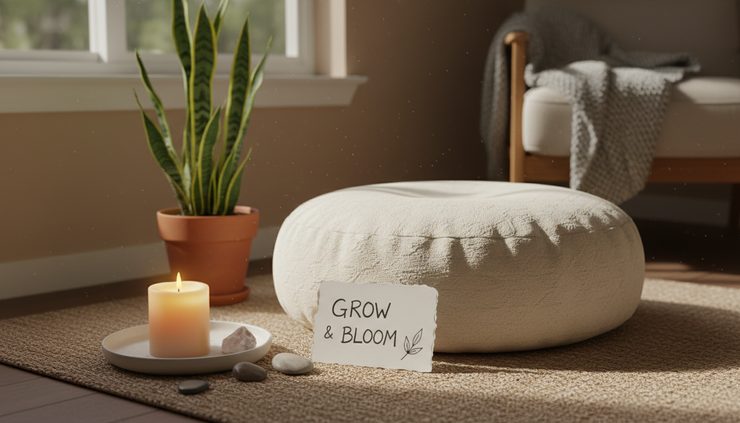
Create a small manifestation corner
You do not need a large space. A shelf, chair, windowsill, or bedside table can work.
Include items that help you feel present and hopeful:
-
A journal
-
A candle
-
A meaningful stone, shell, or keepsake
-
A written intention
-
A photo that represents peace, love, freedom, or growth
-
A plant or fresh flowers
This corner gives your mind a physical place to practice belief. Over time, it becomes a cue for reflection and possibility.
Build a supportive mindset through daily reinforcement
Your environment matters, but it is not separate from your mindset. The two feed each other.
A supportive space helps you think differently. New thoughts help you make different choices. Different choices create new evidence. New evidence makes belief easier.
That is the cycle you want.
Start with one area, not your whole life. Choose the anchor that feels the loudest. It might be a drawer, a photo, a route, an app, a conversation, or a corner of your room.
Then ask:
What is this teaching my mind to expect?
If the answer does not match the life you are manifesting, change the cue.
Move the object. Clear the space. Create a new ritual. Set the boundary. Add beauty. Add order. Add meaning. Add evidence that the future you want is welcome here.
Manifestation does not require pretending everything is perfect. It asks you to participate in your own becoming. Your environment can either keep you rehearsing the past or help you practice the future.
Begin with one small shift today. Let your surroundings become a quiet vote for the person you are ready to be.
Start your mornings with intention
Get the free Manifesting Quantum Daily Affirmations app — a fresh affirmation every day plus a daily reminder at the time you choose.