

Two people can walk into the same room and leave with two different stories.
One notices the friendly face, the open window, and the chance to connect. The other notices the awkward silence, the stain on the carpet, and the risk of being judged. The room did not change. Their attention did.
That simple difference matters more than it first appears.
Focus does not bend reality like magic. It does not guarantee that every thought becomes an event. But focus does shape what we notice, how we interpret it, what we feel, what we choose, and which opportunities we are more likely to act on. Over time, those small choices can change the probability of what happens next.
This is where probability, perception, and emotion meet. Life is not a fixed script. It is a field of possibilities, and the mind is constantly filtering which possibilities feel visible, safe, dangerous, realistic, or worth pursuing.

Probability is not certainty
Probability is often misunderstood. It does not mean something will happen. It means something has a greater or lower chance of happening under certain conditions.
If a coin is fair, the chance of heads is about half on each flip. But life is not a clean coin toss. Most human outcomes involve many moving parts:
- Past experience
- Skill and preparation
- Social environment
- Timing
- Emotional state
- Attention
- Risk tolerance
- Habits
- Interpretation
Focus enters the picture because it affects behavior. Behavior affects conditions. Conditions affect probability.
Imagine two people looking for a new job. Both have similar skills. One believes, “There may be something out there for me,” and starts noticing openings, asking friends, updating a resume, and applying. The other believes, “There’s no point,” and stops looking closely.
Neither mindset guarantees success or failure. But one mindset increases contact with possible opportunities. The other reduces it. After a few months, their “luck” may look very different.
This is not mystical. It is statistical. Repeated attention creates repeated action, and repeated action changes the odds.
Your brain filters more than it shows you
The brain receives far more information than conscious awareness can handle. At any moment, sights, sounds, memories, body signals, and emotional cues compete for attention. The mind has to filter.
That filter is useful. Without it, daily life would feel overwhelming. But the filter is not neutral. It is shaped by what the brain expects, fears, values, and practices noticing.
A common example is buying a car, then suddenly seeing that same model everywhere. The cars were already on the road. Your brain just started marking them as relevant.
The same thing happens with emotional themes.
If someone feels unsafe, they may notice threat faster. If someone feels hopeful, they may notice openings faster. If someone expects rejection, they may scan for signs of disinterest. If someone expects kindness, they may catch small gestures of warmth.
This does not mean perception is fake. It means perception is selective.
Reality is larger than what attention selects from it.
That single idea can soften many inner stories. A bad day may be real, but it is rarely the whole picture. A painful interaction may matter, but it may not define the entire relationship. A fear may be meaningful, but it may not be a prediction.
Emotions change what feels probable
Emotion has a powerful effect on probability because it changes what the future feels like.
When fear is strong, negative outcomes can feel more likely than they are. A small mistake becomes “I’m going to fail.” A delayed text becomes “They’re upset with me.” One awkward moment becomes “I always ruin things.”
When joy or confidence is present, positive outcomes can feel more available. A challenge becomes “I can learn this.” A stranger becomes “This could be a good conversation.” A setback becomes “This is uncomfortable, but not final.”
The feeling does not prove the prediction. Yet the feeling often guides the next step.
Consider this simple chain:
- A person feels anxious before a gathering.
- Their mind predicts rejection.
- They avoid eye contact and keep answers short.
- Others read them as uninterested.
- The person leaves feeling rejected.
The original fear shaped behavior, and the behavior helped create the very experience the person feared.
Now imagine a small shift:
- The person still feels anxious.
- They choose to focus on curiosity instead of self-protection.
- They ask one sincere question.
- The conversation warms slightly.
- They leave with one pleasant moment.
The anxiety did not disappear. The outcome was not guaranteed. But the focus changed the probability of connection.

Focus can create different lived realities
The phrase “your reality” can sound vague, but it points to something practical. Reality has at least two layers.
The first layer is external. This includes events, people, weather, money, health, time, and physical facts.
The second layer is experienced. This includes meaning, memory, expectation, emotional tone, and personal interpretation.
Both layers matter. You cannot think a storm into sunshine. But your focus can shape whether the storm becomes a ruined day, a needed pause, a problem to solve, or a story you later tell with humor.
Here are a few everyday ways shifting focus can lead to different realities.
A difficult conversation becomes a chance to understand
A person enters a conversation thinking, “They’re attacking me.” Their body tightens. They interrupt. They prepare a defense.
If they shift focus to “What are they trying to express?” something changes. They may still disagree, but they listen differently. They ask better questions. They notice pain behind criticism. The conversation has a greater chance of becoming useful instead of explosive.
A mistake becomes data instead of identity
Someone gives a poor presentation, misses a deadline, or handles a moment badly. If the focus lands on “I’m incompetent,” the mind turns one event into a label.
A different focus asks, “What can this teach me?” That question does not erase responsibility. It makes growth more likely. The person may practice, apologize, adjust expectations, or prepare more carefully next time.
The event stays the same. The future probability changes.
A normal day becomes evidence of support
On a stressful day, the brain may collect evidence that life is heavy. The long line, the rude comment, the unpaid bill, and the headache all become part of one story.
A slight shift does not deny the stress. It simply widens the frame. The warm coffee, the neighbor’s wave, the working phone, the song on the drive, the fact that someone held the door open. These details do not solve every problem, but they change the nervous system’s sense of the day.
A wider frame often creates more emotional room. With more room, better choices become possible.
The science behind perception and expectation
Psychology and neuroscience both support the idea that expectation influences experience.
The brain does not passively record the world like a camera. It predicts. It uses past experience to guess what is happening and what might happen next. Then it updates those guesses based on incoming information.
This is one reason two people can interpret the same neutral look in different ways. One sees boredom. Another sees concentration. Their brains use different histories and emotional states to fill in the gap.
Several well-known concepts help explain this process.
Selective attention
The mind prioritizes some information and ignores the rest. Focus acts like a spotlight. What sits inside the spotlight seems clearer, more intense, and more important.
Confirmation bias
People tend to notice and remember information that supports what they already believe. If someone believes they are unlucky, they may collect proof of misfortune and overlook moments of help or possibility.
Mood-congruent perception
Emotional state affects memory and interpretation. Sadness can make sad memories easier to access. Anxiety can make threat cues stand out. Calm can make options easier to see.
Self-fulfilling patterns
Expectations can shape behavior in ways that make the expected outcome more likely. This can happen in relationships, learning, leadership, health habits, and social confidence.
None of this means thoughts control everything. Life includes chance, systems, biology, other people’s choices, and real limits. A healthy view of mindset should never blame people for hardship.
The better point is this: thoughts shape participation. Your inner state influences how you meet the world, and that can change what becomes possible.

Attention trains the mind over time
A single positive thought may not change much. A repeated focus can.
The brain learns through repetition. When someone practices scanning for danger, that pathway becomes faster. When someone practices gratitude, problem-solving, patience, or curiosity, those pathways also become more available.
This is not about forced positivity. Forced positivity can become another form of denial. The goal is not to pretend pain is pleasant. The goal is to become more skillful with attention.
Useful focus sounds like this:
- “What else is true right now?”
- “What is one next step I can take?”
- “Is this fear a fact, or is it a prediction?”
- “What am I not seeing because I am upset?”
- “What outcome do I want to make more likely?”
These questions do something subtle. They move the mind from reaction to participation.
A person stuck in resentment may repeatedly notice offense. A person practicing appreciation may still notice problems, but they also notice effort, progress, and care. Over years, those patterns shape relationships, choices, and memory.
Life becomes partly built from what attention rehearses.
Probability does not remove mystery
Even with the best mindset, probability stays probability.
A kind person can still be misunderstood. A prepared person can still fail. A hopeful person can still face loss. The world is too complex for simple formulas.
This is why the relationship between focus and reality should be held with humility. Mindset is powerful, but it is not total control. It is one influence among many.
That may sound less dramatic, but it is more useful.
If thoughts controlled everything, every difficulty would become a personal failure. If thoughts controlled nothing, inner work would be pointless. The truth sits between those extremes. Focus is not the whole story, but it is part of the story you can practice.
That practice matters because even a small change in probability can become meaningful over time.
If a calmer focus helps someone avoid one needless conflict each week, relationships change. If a hopeful focus helps someone apply for one opportunity they would have ignored, a career path may change. If a compassionate focus helps someone recover faster from mistakes, confidence grows.
Small odds, repeated often, can alter a life.
How to reflect on your own focus
The easiest way to understand this is to observe it in your own experience.
Think of a time when you expected a day to go badly. Did you notice more irritation than usual? Did small problems feel like proof? Did your body prepare for disappointment before anything serious happened?
Now think of a time when you felt open or excited. Did you speak more freely? Did you notice chances to connect? Did obstacles feel less final?
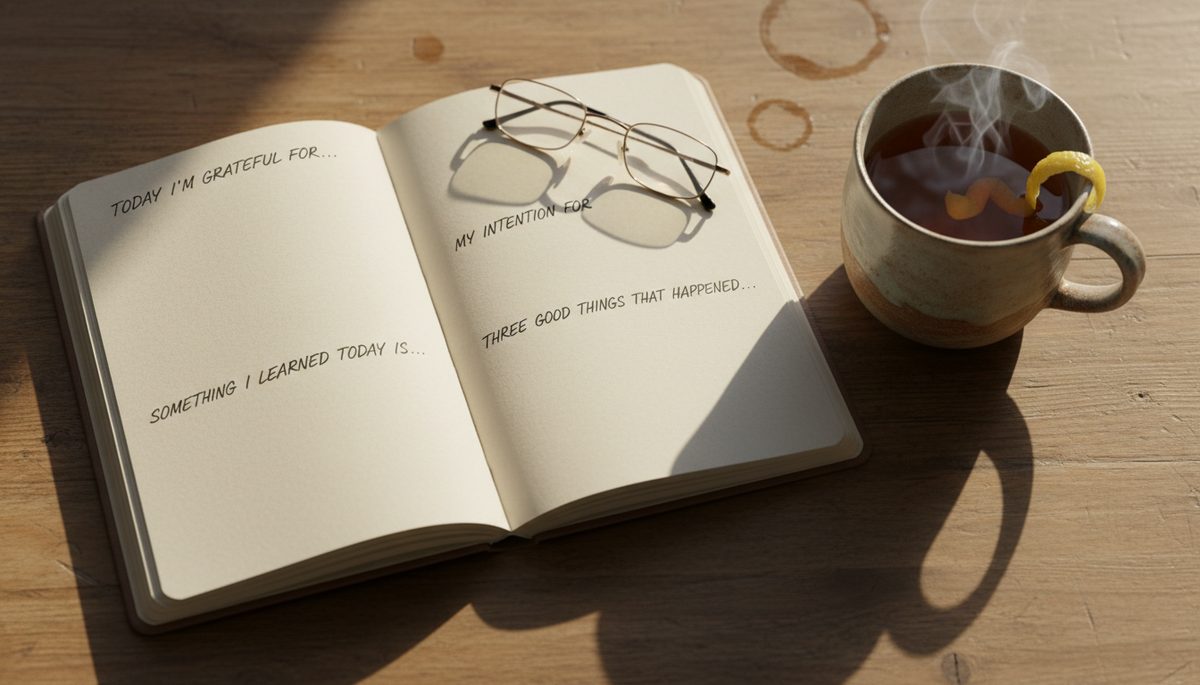
Reflection works best when it stays specific. Try writing about one recent situation using these prompts:
- What was I focused on before it happened?
- What emotion was strongest in me?
- What did I assume was likely?
- How did that assumption affect my behavior?
- What did I notice, and what might I have missed?
- If I replayed the situation with a wiser focus, what might change?
The goal is not to judge the old focus. It once had a reason. The goal is to see whether it still serves the life you want to build.
A protective focus may have helped you survive an earlier season. A critical focus may have helped you improve. A cautious focus may have kept you safe. But every focus has a cost when it becomes automatic.
Awareness gives you a choice.
The reality you experience is partly a practice
Focus is not a trick for getting everything you want. It is a practice of relating to life with more awareness.
When you change what you repeatedly attend to, you change what your brain marks as relevant. When you change what feels relevant, you change what you notice. When you change what you notice, you change what you choose. When you change what you choose, you change the probabilities around you.
That chain is simple, but it is not small.
A fearful mind may live in a world full of warnings. A curious mind may live in a world full of questions. A grateful mind may live in a world where support is easier to recognize. A determined mind may live in a world where setbacks become part of the route rather than the end of it.
The outer world will still surprise you. Chance will still play its part. Other people will still have their own minds. Pain, loss, and uncertainty will still exist.
Yet within all of that, your attention remains one of the most intimate forms of influence you have.
So ask yourself gently: What am I practicing noticing? What future does my focus make more likely? And what might become possible if I gave more attention to courage, connection, learning, or hope?
The answer may not change everything at once. But it may change the next choice. And often, the next choice is where a new reality begins.