
The words that follow “I am” rarely stay neutral. They become labels, expectations, reminders, and sometimes limits. Say “I am always behind” often enough, and the mind begins to scan for proof. Say “I am learning to trust myself,” and a different part of you wakes up.
That is the power of “I am” in manifestation. These two words do more than start a sentence. They point your attention, shape your self-image, and invite your choices to line up with the identity you are practicing.
Manifestation is often described as calling something into reality through thought, belief, energy, and action. At its healthiest, it is not wishful thinking or pretending life has no obstacles. It is the practice of becoming conscious of what you believe, what you repeat, and what you choose from there.
“I am” statements sit at the center of that practice because they speak in the language of identity.

Why the words after I am carry so much weight
“I am” is not just a phrase. It is a claim of being.
When you say, “I am confident,” your mind hears something different than “I hope I become confident someday.” The first phrase brings the quality into the present. The second keeps it at a distance.
That shift matters because most people act from identity more than desire. If someone believes, “I am bad with money,” they may avoid looking at their bank account, delay learning, or repeat the same patterns. If they begin practicing, “I am becoming responsible with money,” they create space for new behavior.
The phrase “I am” works like an inner name tag. It tells the mind what role to rehearse.
A few common examples show how quickly identity language can shape behavior:
- I am resilientThis can remind you that a setback is not the end of the story.
- I am worthy of love and respectThis can support healthier boundaries and more honest relationships.
- I am disciplined with my energyThis can help you pause before saying yes to something that drains you.
- I am open to receiving good thingsThis can soften the habit of rejecting help, praise, rest, or joy.
- I am capable of learning what I need to knowThis can make growth feel possible instead of intimidating.
A strong “I am” statement does not erase fear. It gives you a steadier place to stand while fear is present.
The psychology behind I am affirmations
From a psychological point of view, “I am” statements can influence mindset because they train attention. The brain constantly filters information. It looks for cues that match what you already believe, value, and expect.
If you repeat, “I am stuck,” your mind may keep highlighting every reason change feels impossible. If you practice, “I am taking one honest step forward,” your attention may start catching small chances to act.
This does not mean words magically control every outcome. Life includes real limits, timing, other people’s choices, grief, stress, and uncertainty. Yet the words you repeat can influence how you meet those realities.
“I am” affirmations can support personal growth in several grounded ways.
They interrupt old mental loops
Many people carry “I am” statements they never chose.
“I am not enough.”
“I am too late.”
“I am the kind of person who quits.”
“I am hard to love.”
These thoughts may come from past criticism, painful experiences, comparison, or years of self-protection. When repeated, they feel familiar, which can make them seem true.
A new “I am” statement interrupts the loop. It creates a pattern break. At first, that new sentence may feel strange. That is normal. The goal is not to force instant belief. The goal is to offer the mind a healthier message often enough that it becomes available.
Try this gentle replacement:
“I am failing.”
“I am too sensitive.”
“I am behind.”
“I am powerless.”
“I am learning through this.”
“I am deeply aware and learning how to care for myself.”
“I am moving at a pace that can become steady.”
“I am able to choose my next response.”
The replacement should feel honest enough to repeat. If “I am fearless” feels fake, try “I am willing to move with courage.” Truth has more staying power than performance.
They shape self-image
Self-image is the way you see yourself. It affects what you allow, avoid, pursue, and expect.
When you say “I am creative,” you may become more likely to pick up the notebook, sign up for the class, make the meal differently, or share the idea. The affirmation becomes a bridge between belief and action.
This is where “I am” statements become powerful for personal growth. They do not work best as empty slogans. They work best when paired with evidence.
For example:
- “I am healthy” becomes stronger when you drink water, take a walk, or rest when tired.
- “I am confident” becomes stronger when you speak up once, even with a shaky voice.
- “I am loved” becomes stronger when you let someone support you.
- “I am focused” becomes stronger when you put your phone away for 20 minutes.
Action gives the affirmation roots. The words plant the identity. The behavior waters it.

The spiritual meaning of I am
Spiritually, “I am” has long been linked with presence, being, and the creative force of consciousness. Across many traditions, the idea of naming oneself carries deep significance. Words are not treated as random sounds. They are viewed as expressions of energy, intention, and truth.
When you say “I am,” you are not only describing yourself. You are tuning your awareness toward a state of being.
“I am peaceful” invites peace.
“I am guided” invites trust.
“I am grateful” invites attention toward what is already here.
“I am whole” invites a deeper sense of inner completeness.
From a spiritual lens, the phrase can feel like a doorway between the inner and outer world. The inner statement becomes a signal. It may change your energy, posture, choices, and openness. Then life meets you differently because you are showing up differently.
This is the heart of I am manifestation: you begin with being, then let doing and receiving flow from that state.
A person who practices “I am abundant” may begin noticing more than money. They may notice time, love, ideas, food, friendship, beauty, and generosity. That does not mean they ignore financial goals. It means they stop living only from lack. Their energy shifts from panic to participation.
A person who practices “I am guided” may still face uncertainty. Yet they may become more willing to listen to intuition, ask for help, watch for patterns, and trust the next step.
Spiritual practice does not need to be complicated. Sometimes it is as simple as placing a hand on your heart and saying one true sentence with full attention.
The power of “I am” grows when the words are spoken with presence, repeated with care, and supported by aligned action.
How to create I am statements that actually help
Not every affirmation lands the same way. A helpful “I am” statement feels clear, personal, and emotionally believable, even if it stretches you.
The best statements are not built to impress anyone. They are built to guide you.
Start with what you are ready to embody
Ask yourself, “What quality do I want to practice today?”
Maybe the answer is patience. Maybe it is courage, softness, discipline, trust, joy, or self-respect.
Then turn that quality into an identity phrase:
- I am patient with my growth.
- I am courageous in small moments.
- I am gentle with myself while I change.
- I am disciplined enough to keep promises to myself.
- I am open to joy now.
- I am worthy of my own respect.
The phrase should point toward who you are becoming, not punish who you have been.
Use present tense with compassion
Present tense gives the statement power. Compassion makes it sustainable.
If “I am successful” feels too far away, soften it without weakening it:
- I am becoming successful in ways that feel true to me.
- I am building a life I respect.
- I am learning to receive success with ease.
- I am allowed to grow beyond my old story.
If “I am confident” feels impossible, try:
- I am practicing confidence today.
- I am safe to take up space.
- I am learning to trust my voice.
- I am brave enough to be seen.
The words should stretch you, not shame you.
Keep it specific enough to remember
A vague affirmation fades fast. A clear one stays close.
Compare these:
“I am positive.”
“I am better.”
“I am abundant.”
“I am strong.”
“I am choosing one hopeful thought right now.”
“I am treating myself with more respect today.”
“I am open to receiving support, ideas, and opportunities.”
“I am strong enough to take the next step.”
Specific statements give the mind something real to practice.
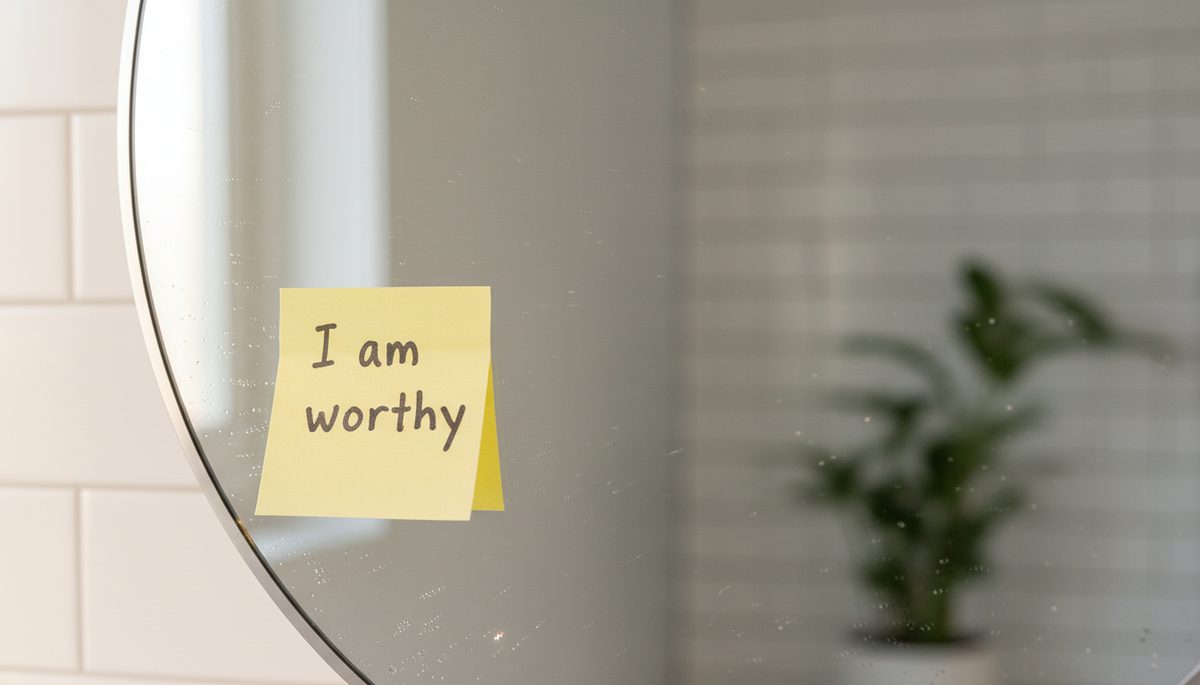
I am affirmations for personal growth
Here are examples you can adapt for different areas of life. Read them slowly. Notice which one gives you a sense of relief, strength, or possibility.
For confidence
- I am allowed to take up space.
- I am proud of the person I am becoming.
- I am capable of speaking with clarity.
- I am learning to trust myself in real time.
- I am brave enough to begin before I feel ready.
These affirmations support confidence by shifting attention from approval to self-trust. They remind you that courage often comes during the action, not before it.
For healing
- I am safe to heal at my own pace.
- I am more than what happened to me.
- I am gentle with the parts of me that still hurt.
- I am open to peace in my body and mind.
- I am worthy of care, support, and rest.
These statements encourage patience. They do not rush healing or deny pain. They create room for tenderness, which is often where real change starts.
For abundance
- I am open to receiving good in expected and unexpected ways.
- I am grateful for what I have while welcoming more.
- I am capable of creating value.
- I am worthy of stability, ease, and support.
- I am learning to make choices from trust rather than fear.
Abundance affirmations work best when they expand your sense of possibility. They can help you notice resources, ask better questions, and take grounded steps.
For discipline and focus
- I am the kind of person who honors my commitments.
- I am focused on what matters today.
- I am consistent in small ways.
- I am patient with the process.
- I am willing to keep going after the excitement fades.
These statements help personal growth because they connect discipline to identity. Instead of relying only on motivation, you begin practicing a self-image that can carry you through ordinary days.
For love and relationships
- I am worthy of honest, kind love.
- I am safe to express my needs.
- I am learning to receive without guilt.
- I am surrounded by relationships that support my growth.
- I am loving without abandoning myself.
These affirmations can support better boundaries and deeper connection. They bring awareness to how you show up with yourself and others.
How to make I am statements part of daily life
The goal is not to repeat affirmations once and wait for life to transform overnight. The goal is to build a rhythm. Small daily repetition can shift the emotional climate of your inner world.
Choose one or two practices that feel natural.
- Say one statement when you wake upBefore checking your phone, place a hand on your heart and speak one “I am” statement out loud.
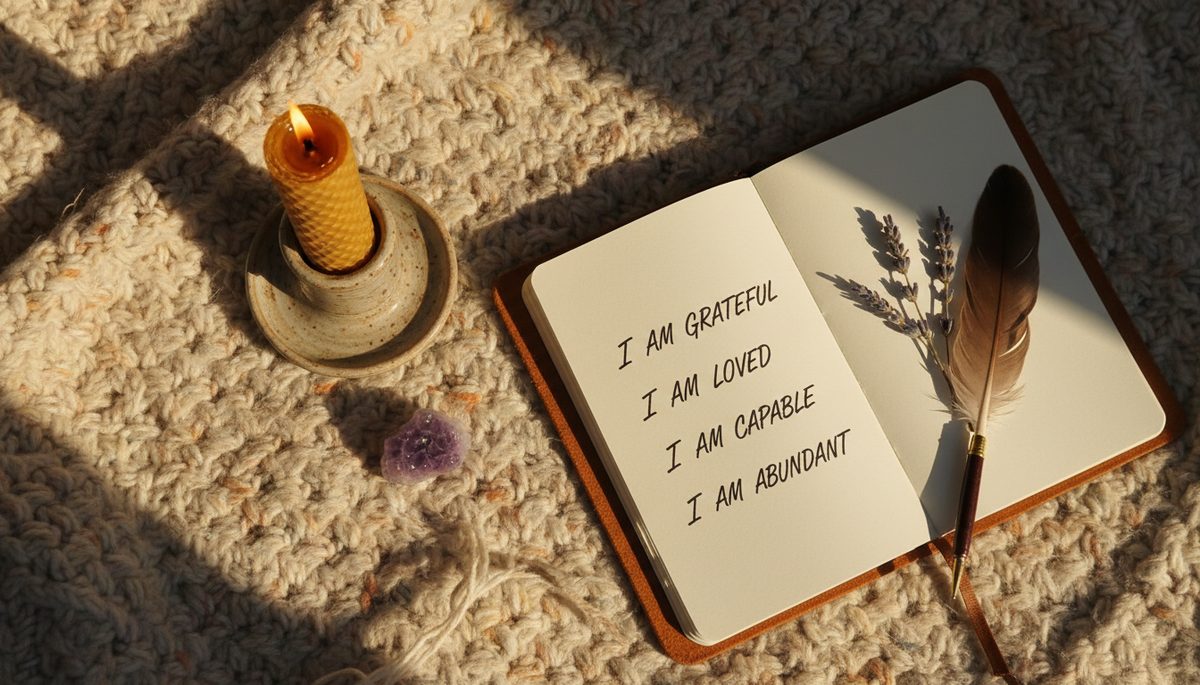
- Write it in a journalWrite the same affirmation five to ten times. Let the words slow you down.
- Pair it with a habitRepeat your statement while brushing your teeth, making coffee, walking, stretching, or getting ready for bed.
- Use it before a challengeBefore a conversation, workout, interview, creative session, or difficult task, say the identity you want to embody.
- Look for proofAt night, write one moment when you lived the affirmation, even in a small way.
That last step matters. If your affirmation is “I am consistent,” proof may look like sending one email, washing one dish, taking one walk, or pausing before reacting. Tiny evidence teaches the mind, “This is who I am now.”
Choose words that honor your future self
Every “I am” statement is a seed. Some seeds grow fear. Some grow courage. Some keep you tied to an old story. Some help you step into a wider one.
You do not need perfect belief to begin. You only need willingness. Choose one sentence that feels like a kinder truth than the one you have been repeating. Speak it daily. Write it down. Act in one small way that supports it.
Try this today:
I am becoming the person I was meant to be, one conscious choice at a time.
Let those words meet you where you are. Let them guide your next step. Let them remind you that reality is shaped not only by what happens around you, but also by what you keep becoming within yourself.