

Every thought you repeat is a brushstroke. Every choice you make adds color. Every emotion changes the light.
That is the most grounded way to understand manifestation. It is not just wishing hard enough and waiting for the universe to deliver. It is the everyday process of shaping your attention, beliefs, actions, relationships, and environment until your outer life begins to reflect your inner patterns.
This 10-part blog series explores manifestation from many angles: science, personal change, mindset, emotions, practical rituals, common myths, and creative expression. Each post is built for a thoughtful five-minute read and includes a dynamic art element to make the idea easier to see, feel, and remember.

1. We Are Always Manifesting Something
The first post in the series begins with a simple claim: manifestation is always happening.
People often treat manifestation as a special practice. They imagine vision boards, affirmations, candles, or meditation cushions. Those tools can help, but they are not the whole story.
Manifestation is the ongoing relationship between inner patterns and outer behavior. If someone believes they are always overlooked, they may speak less, avoid asking for opportunity, or miss signs of support. That belief slowly becomes a lived reality.
If another person believes they can learn, recover, and try again, they may take different actions after disappointment. That belief also becomes visible.
The art element for this post could be an animated sketch of a line becoming a road. Each repeated thought adds another stroke. Over time, the road becomes easier to travel.
Core takeaway: You do not start manifesting when you start a ritual. You start becoming conscious of what you are already practicing.
2. The Science Behind Manifestation Is About Attention and Action
The second post grounds manifestation in psychology and brain science without making exaggerated claims.
The brain filters huge amounts of information. Attention helps decide what gets noticed. When you focus on a goal, your mind may begin spotting resources, patterns, and chances that were already present but easy to miss.
This does not mean thoughts magically control reality. It means thoughts influence perception. Perception influences choices. Choices influence outcomes.
Several well-known concepts help explain this process:
-
Selective attention What you focus on becomes easier to notice.
-
Neuroplasticity Repeated thoughts and behaviors can strengthen mental pathways over time.
-
Confirmation bias The mind often looks for evidence that supports what it already believes.
-
Self-fulfilling expectations Beliefs can affect behavior in ways that help bring about the expected result.
A person who says, “I am bad at speaking up,” may tense up before every conversation. A person who says, “I am practicing clear communication,” has a different starting point. The second thought does not guarantee success, but it creates room for better action.
Art element: A layered diagram of the brain as a city at night, with lights turning on along the roads marked attention, belief, emotion, and action.
3. A Personal Story About Seeing Differently
The third post centers on a personal-style story.
Imagine someone named Maya. She wants a more creative life, but she keeps saying, “I never have time.” Her days feel full. Her sketchbook stays closed. She waits for the perfect open weekend that never arrives.
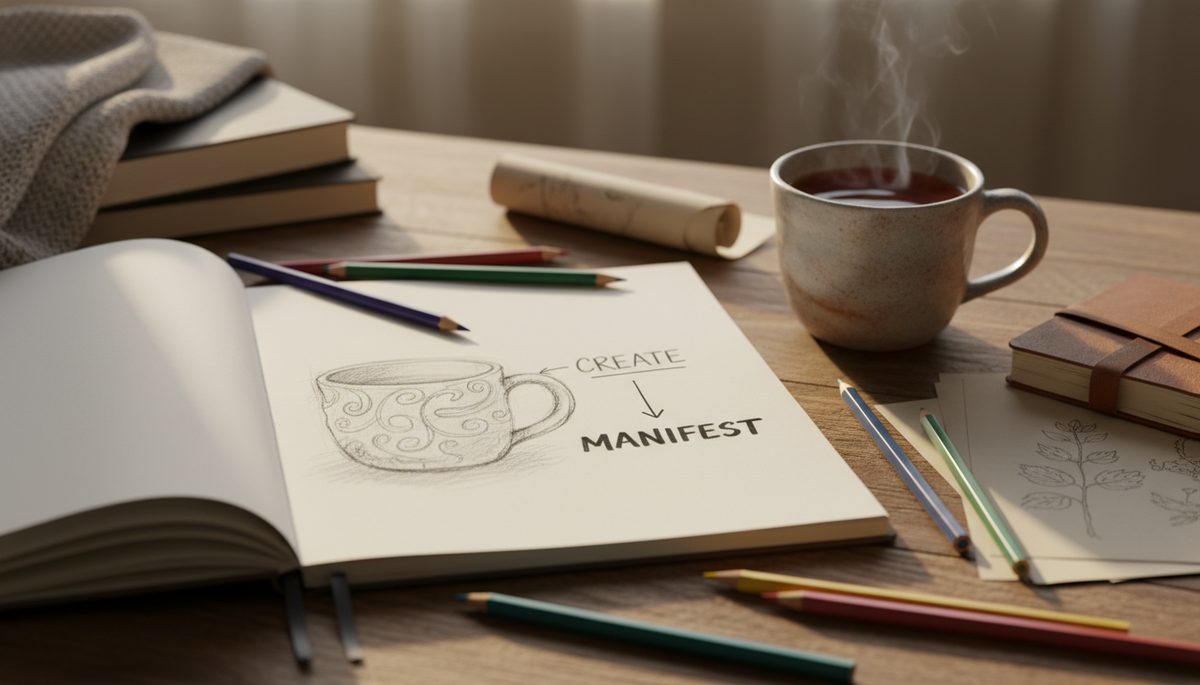
One evening, she decides to stop waiting for hours and starts with 10 minutes. She sketches the mug beside her. The next day, she draws her shoes. A week later, she notices colors on her walk that she used to ignore.
Nothing supernatural happens. Yet her reality changes.
She begins introducing herself as someone who draws. She visits a small gallery. She meets people who care about art. She applies for a local creative workshop.
The first manifestation was not the workshop. It was the identity shift.
She moved from “I do not have time” to “I make small moments for what matters.” That belief shaped her attention. Her attention shaped her habits. Her habits shaped her world.
4. Mindset Is the Frame Around the Picture
The fourth post looks at mindset as a frame, not a personality trait.
A frame changes how art is experienced. The same painting can feel calm, dramatic, chaotic, or sacred depending on what surrounds it. Mindset works the same way.
A fixed mindset says:
“I failed, so I am not capable.”
A growth mindset says:
“I failed, so I have information.”
That small shift changes the emotional weather around a challenge. It does not remove effort. It makes effort feel useful.
In manifestation practice, mindset matters because it sets the meaning of events. A delay can mean rejection, or it can mean preparation. A hard conversation can mean conflict, or it can mean honesty. A slow start can mean proof that nothing works, or it can mean the first layer of paint drying.
The post’s visual element could show one painting inside three different frames. Each frame changes the mood, while the painting itself stays the same.
Core takeaway: Mindset does not deny reality. It decides how to meet reality.
5. Emotions Are Not Obstacles to Manifestation
The fifth post challenges the idea that only positive feelings are allowed.
Many people misunderstand manifestation and believe they must feel joyful all the time. That belief can create shame. Real life includes grief, anger, fear, doubt, and exhaustion. These emotions do not cancel progress.
Emotions are signals. They show where attention, care, boundaries, or healing may be needed.
Fear may point to a desire that matters. Anger may reveal a crossed boundary. Sadness may show that something needs space to be honored before the next step can feel true.
Healthy manifestation does not require pretending. It asks for emotional honesty.
A useful practice is to name the feeling and then name the next aligned action.
For example:
“I feel afraid, and I can still send the email.”
“I feel discouraged, and I can rest without giving up.”
“I feel uncertain, and I can take one honest step.”
Art element: A watercolor portrait where each emotion appears as a different color moving through the body, not trapped there.
6. Practical Manifestation Begins With Clear Desire
The sixth post gives readers practical steps.
A vague desire creates vague movement. “I want a better life” may be true, but it is too broad to guide behavior. Clear desire gives the mind something to organize around.
A practical manifestation process can be simple:
- Choose one area of life.
- Name what you want in plain language.
- Ask why it matters.
- Identify the belief that would support it.
- Take one physical action within 24 hours.
- Track what changes in your attention, choices, and energy.
If the desire is “I want deeper friendships,” the action might be inviting one person for a walk. If the desire is “I want to feel stronger,” the action might be a short movement practice. If the desire is “I want more creative confidence,” the action might be sharing one small piece of work.
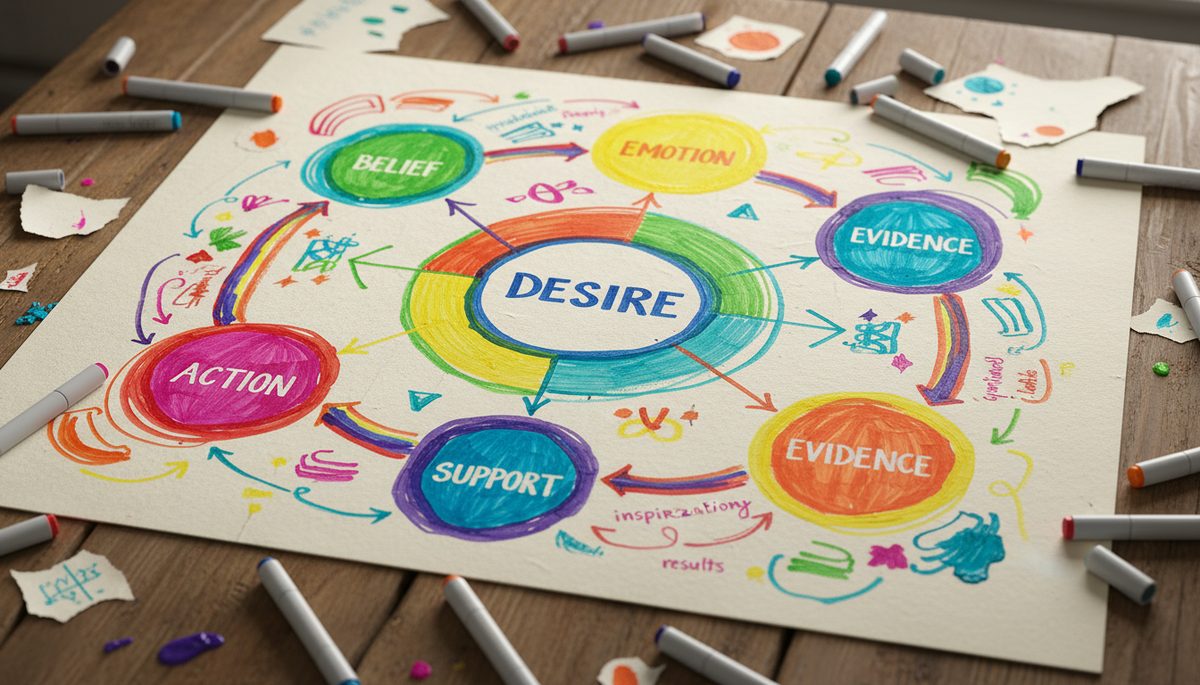
The post can include a printable art worksheet with a central circle labeled “desire” and outer circles labeled belief, emotion, action, support, and evidence.
7. Common Misconceptions Keep People Stuck
The seventh post clears up confusion.
One misconception says manifestation means perfect control. It does not. Life includes other people, systems, timing, chance, and limits. Manifestation is participation, not domination.
Another misconception says negative thoughts ruin everything. They do not. A passing thought is not a life sentence. Repeated patterns matter more than mental noise.
A third misconception says action is unnecessary. This is where manifestation becomes fantasy. Desired realities need behavior. Even inner work is a form of action.
A fourth misconception says struggle means failure. Many meaningful changes involve discomfort. The discomfort may come from learning a new skill, setting a boundary, or becoming visible in a new way.
Core takeaway: Manifestation works best when it is honest, grounded, and paired with action.
The art element for this post could be a myth-busting collage. Torn paper phrases like “just think positive” and “never doubt” are rearranged into a new phrase: “notice, choose, practice, repeat.”
8. Your Environment Is Part of the Practice
The eighth post explores surroundings.
People often focus on thoughts but ignore the rooms, routines, and relationships that shape those thoughts. Environment matters.
A cluttered space may not ruin a dream, but it can make focus harder. A phone full of stressful inputs can train the nervous system toward comparison. A room with no visible sign of your goals can make those goals feel distant.
Small environmental cues can support manifestation:
- Put the book where you will see it.
- Leave your walking shoes by the door.
- Place your journal beside your bed.
- Hang one image that represents the feeling you are building.
- Spend more time with people who treat growth as normal.
The point is not to create a perfect space. The point is to make aligned action easier to choose.
Art element: A before-and-after room illustration where the second version includes warmer light, a visible journal, a plant, a small canvas, and an open path across the floor.
9. Art Makes Manifestation Visible
The ninth post brings creative expression to the center.
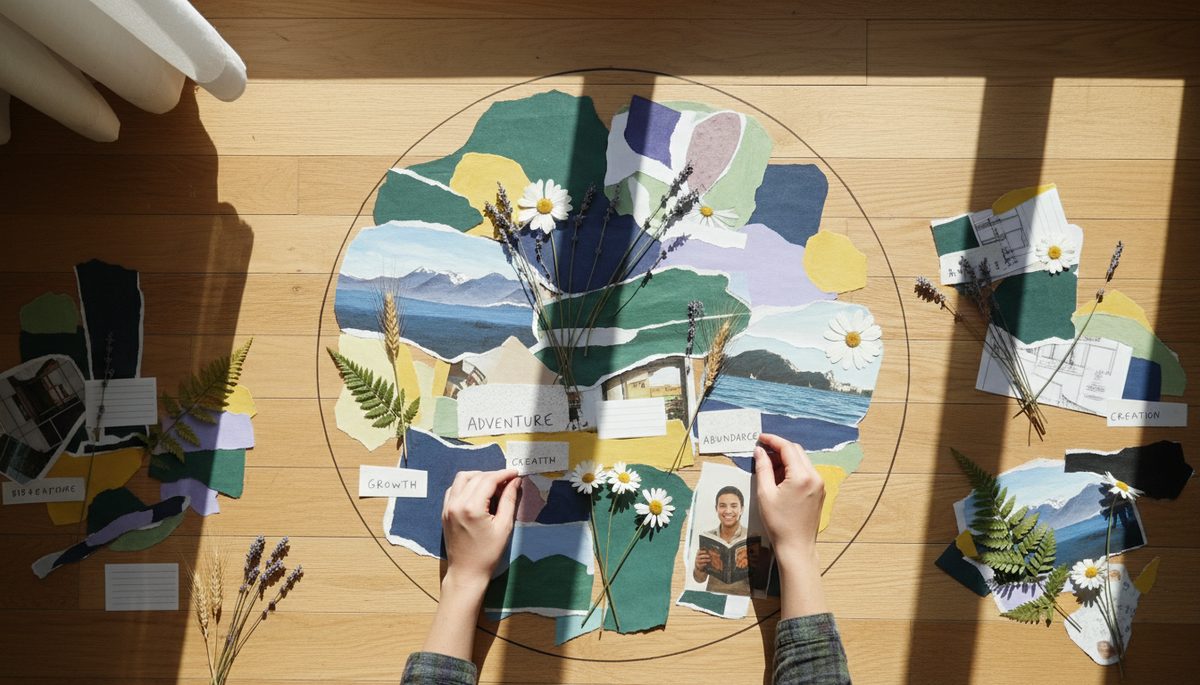
Art helps because it turns inner experience into something you can see. A vision board, painting, poem, altar, playlist, or movement practice can hold a desire before it has fully entered daily life.
This matters because the mind responds to symbols. A symbol can gather emotion, memory, and intention in one place.
A vision board is not powerful because paper has magic. It is useful because it reminds attention where to return. A sketch can reveal what words cannot. A song can help the body feel a future before the plan is complete.
Art also invites play. That matters. When manifestation becomes tense, it often turns into pressure. Creative practice softens that pressure and makes room for curiosity.
10. Manifestation Is a Daily Relationship With Reality
The final post ties the series together.
Manifesting your reality is not a one-time event. It is a daily relationship between what you believe, what you feel, what you notice, and what you do.
Some days the practice will feel inspired. Other days it will look like washing the dishes, making the call, taking the walk, resting instead of forcing, or telling the truth.
The strongest manifesting practice is often quiet. It happens when someone chooses the thought that opens a door instead of closing one. It happens when they honor an emotion without being ruled by it. It happens when they take a small action that matches the life they say they want.
This series is built around one steady idea: you are always creating with your attention, choices, and energy. The invitation is to create with more awareness.
How to Use This Series
Read one post at a time. Let each idea become a practice before moving to the next.
A simple rhythm works well:
- Read the post.
- Notice one belief or habit it brings up.
- Create one small art response.
- Take one aligned action the same day.
- Record what changed.
The art response can be tiny. A color. A shape. A sentence in the margin. A photo of something that reflects the feeling you want to grow.
The goal is not to perform spirituality or productivity. The goal is to build a more conscious relationship with your own life.
Manifestation becomes powerful when it leaves the realm of fantasy and enters the body, the calendar, the conversation, the room, and the next choice.
Start there. Pick one thought that feels true and useful. Pair it with one action. Then add another brushstroke tomorrow.